
 En
En Tr
TrFibroids, one of the most common uterine conditions affecting women’s health, are tumors that are usually benign. Developing from the muscular tissue of the uterus, these growths can go unnoticed for years without causing any symptoms in some women, while in others they may lead to complaints such as irregular periods, pain, or a feeling of pressure. For this reason, it is important to understand how fibroids form, which symptoms they may cause, and in which cases treatment is needed.
Fibroids that develop in the uterus can vary in size and can form in different areas. Thanks to regular gynecological check-ups, they can now be detected at an early stage and the appropriate treatment approach can be determined. It is especially important for women experiencing changes in their menstrual cycle or persistent pain in the groin area to be aware of this condition for the sake of their health.
Contents 10
- What Is a Uterine Fibroid?
- What Causes Fibroids?
- What Are the Symptoms of Fibroids?
- What Are the Types of Fibroids?
- Who Is More Likely to Develop Fibroids?
- How Are Fibroids Diagnosed?
- When Do Fibroids Become Dangerous?
- When Do Fibroids Become Dangerous?
- What Is Fibroid Surgery?
- When Is Fibroid Surgery Necessary?
What Is a Uterine Fibroid?
What is a uterine fibroid? This is one of the most frequently researched topics related to women’s health. Fibroids are masses that develop from the muscular layer of the uterus and are generally benign. Medically also known as “uterine fibroids,” these growths can appear inside the uterine cavity or on the surface of the uterus.
In many women, fibroids are discovered incidentally during a routine gynecological examination. In some cases, however, depending on their size or location, they can cause various complaints.
What Causes Fibroids?

There is no single definitive answer to what causes fibroids, but certain factors are known to influence their formation. Hormonal balance and genetic predisposition play a particularly important role in this process.
Factors that may influence fibroid development include:
- Hormones: High levels of estrogen and progesterone can promote fibroid growth.
- Genetic predisposition: Women with a family history of fibroids may have a higher risk of developing them.
- Age: Fibroids are generally more common in women of reproductive age.
- Excess weight: Obesity can affect hormonal balance and may be among the contributing risk factors.
- Early onset of menstruation: Prolonged hormone exposure may trigger fibroid development.
Although these factors increase the likelihood of developing fibroids, some women may develop them without any identifiable risk factor.
What Are the Symptoms of Fibroids?
Fibroid symptoms can vary from person to person. Some women experience no symptoms at all, while others may develop complaints that affect their quality of life.
The most common symptoms of fibroids include:
- Heavier and longer menstrual bleeding than usual
- Spotting or bleeding between periods
- Pain or a feeling of pressure in the groin area
- A feeling of fullness in the lower abdomen
- Frequent urination
- Constipation
- Pain during sexual intercourse
These symptoms can vary depending on the size, number, and location of the fibroids. Anyone experiencing similar complaints is strongly advised to consult an obstetrician-gynecologist.
What Are the Types of Fibroids?
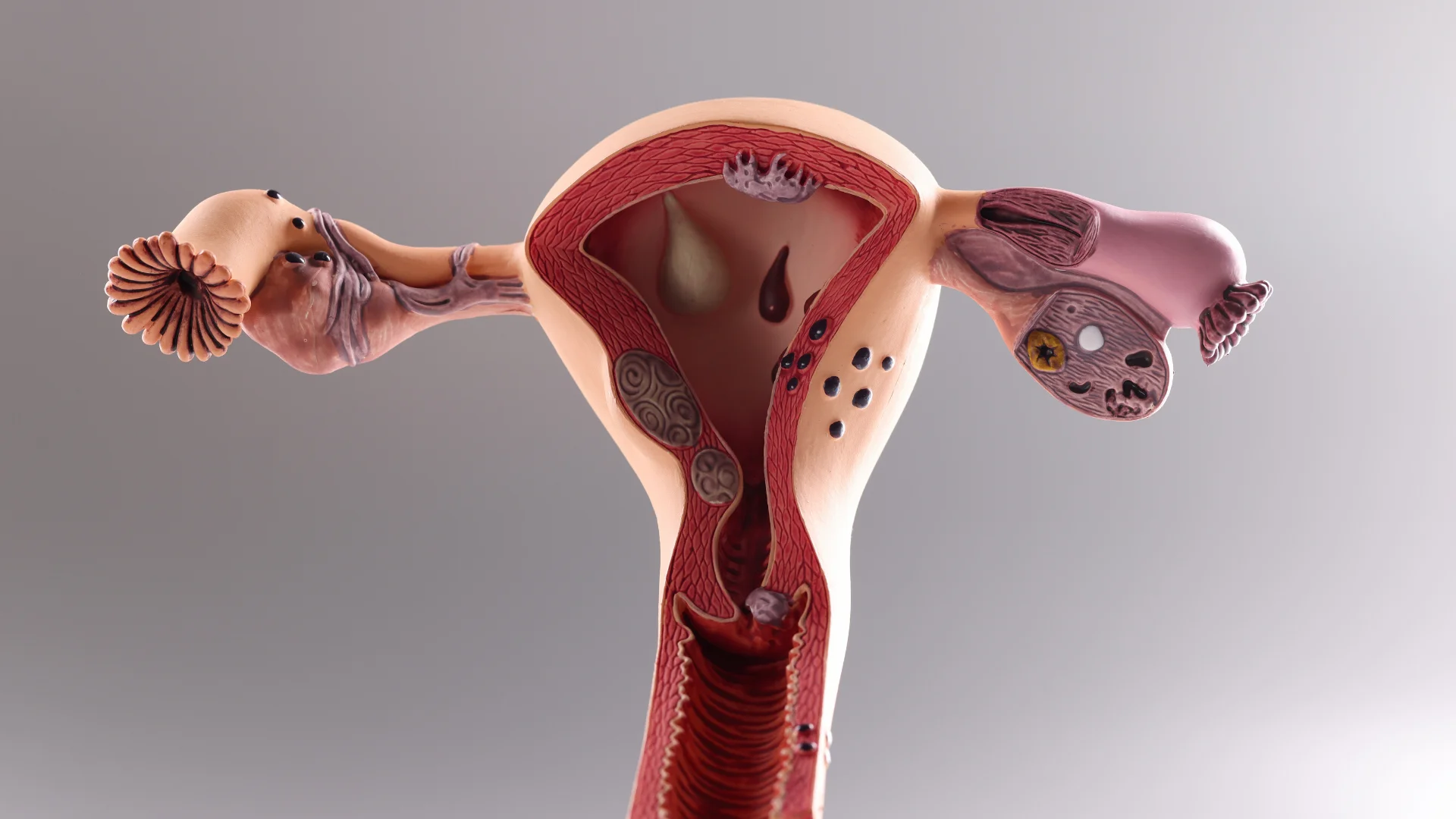
Fibroids are classified into different types based on their location within the uterus. This classification is important both for understanding symptoms and for determining the appropriate treatment method.
The main types of fibroids are:
- Intramural fibroids: Develop within the muscular wall of the uterus and are the most common type.
- Submucosal fibroids: Form close to the inner lining of the uterus and can increase menstrual bleeding.
- Subserosal fibroids: Grow toward the outer surface of the uterus and may press on surrounding organs.
- Pedunculated fibroids: Can grow attached to the uterus by a thin stalk.
The location of a fibroid can directly affect both the symptoms it causes and the treatment approach.
Who Is More Likely to Develop Fibroids?
Fibroids are particularly common in women of reproductive age. Certain factors can increase the likelihood of developing this condition.
Fibroids are more frequently seen in:
- Women over the age of 30
- Those with a family history of fibroids
- Women who have never given birth
- Individuals who are overweight
- People experiencing hormonal imbalance
Having these risk factors can increase the likelihood of developing fibroids, but it does not necessarily mean fibroids will occur.
How Are Fibroids Diagnosed?
Fibroids are usually noticed during a gynecological examination. Thanks to today’s imaging techniques, the location and size of fibroids can be easily determined.
Methods used in the diagnostic process include:
- Gynecological examination: Enlargement or a change in the shape of the uterus may be noticed.
- Ultrasonography: The most commonly used imaging method for detecting fibroids.
- MRI imaging: Used when a more detailed evaluation is needed.
- Hysteroscopy: Allows the inside of the uterus to be examined with a camera.
These methods make it possible to clearly determine the number, size, and location of fibroids.
When Do Fibroids Become Dangerous?
Fibroids are usually benign growths, and in many cases can simply be monitored with regular doctor check-ups. In some cases, however, the growth of fibroids or the complaints they cause may require treatment. Particularly noteworthy situations include very heavy menstrual bleeding, severe pain in the groin or pelvic area, and rapid growth over a short period.
In addition, some fibroids can affect the structure of the uterus, leading to fertility problems, or they may put pressure on the bladder and intestines. When such symptoms appear, it is essential to consult an obstetrician-gynecologist for a proper evaluation.
When Do Fibroids Become Dangerous?
Although fibroids are mostly benign, they may require treatment in certain cases. Especially when they increase in size or cause significant complaints, they should be evaluated under medical supervision.
Situations that may pose a risk include:
- Causing very heavy menstrual bleeding
- Causing severe groin or pelvic pain
- Showing rapid growth
- Leading to fertility problems
- Putting pressure on the bladder or intestines
In such cases, treatment options are evaluated and the most appropriate method is determined.
What Is Fibroid Surgery?
What is fibroid surgery? This is a question often asked by people with large fibroids or significant complaints. Fibroid surgery is the surgical removal of fibroids located in the uterus.
Surgical methods that may be applied include:
- Myomectomy: A surgical procedure in which only the fibroids are removed.
- Laparoscopic surgery: A minimally invasive surgical method performed through small incisions.
- Hysteroscopic surgery: Preferred for removing fibroids located inside the uterine cavity.
- Open surgery: May be applied when fibroids are very large or numerous.
The surgical method is determined based on the size and number of the fibroids, as well as the patient’s overall health status.
When Is Fibroid Surgery Necessary?
Not every fibroid requires surgery. In some cases, regular doctor check-ups and monitoring may be sufficient. However, surgical treatment may be recommended when certain symptoms appear.
Situations that may require surgery include:
- Rapid growth of fibroids
- Anemia caused by heavy bleeding
- Severe pain
- Difficulty becoming pregnant
- Pressure on neighboring organs
The doctor determines the most suitable treatment approach by evaluating the patient’s age, plans for having children, and overall health status.
Fibroids are quite common in women and are generally benign uterine tumors. While they cause no symptoms at all in some women, in others they can lead to complaints such as heavy menstrual bleeding, groin pain, or a feeling of pressure in the abdomen. For this reason, regular gynecological examinations are extremely important for the early diagnosis of fibroids.
Today, thanks to advanced imaging techniques and treatment methods, fibroids can largely be kept under control. However, anyone experiencing noticeable changes in their menstrual cycle, persistent groin pain, or heavy bleeding should consult an obstetrician-gynecologist without delay. As with all health matters, the treatment and follow-up of fibroids must always be carried out under medical supervision.