
 En
 Tr
Contents 12
- How Can You Tell If Your Egg Reserve Has Decreased?
- What Does a Decrease in Ovarian Reserve Mean?
- Why Does Ovarian Reserve Decline?
- What Symptoms Occur When Ovarian Reserve Declines?
- Which Tests Are Used to Diagnose Diminished Ovarian Reserve?
- How Is the AMH Egg Reserve Test Performed?
- When Is the AMH Egg Reserve Test Performed?
- What Should the AMH Egg Reserve Test Result Be?
- Normal AMH Values
- IVF for Women with Low Egg Reserve
- Chance of Pregnancy in Women with Low Egg Reserve
- Treatment of Diminished Ovarian Reserve
How Can You Tell If Your Egg Reserve Has Decreased?
Irregularities in the menstrual cycle or amenorrhea (absence of periods),
Late or irregular ovulation,
An elevated FSH (follicle-stimulating hormone) level,
A low AMH (Anti-Müllerian Hormone) level,
The presence of an abnormal or low number of follicles on ultrasound can all indicate a decline in ovarian reserve.
What Does a Decrease in Ovarian Reserve Mean?
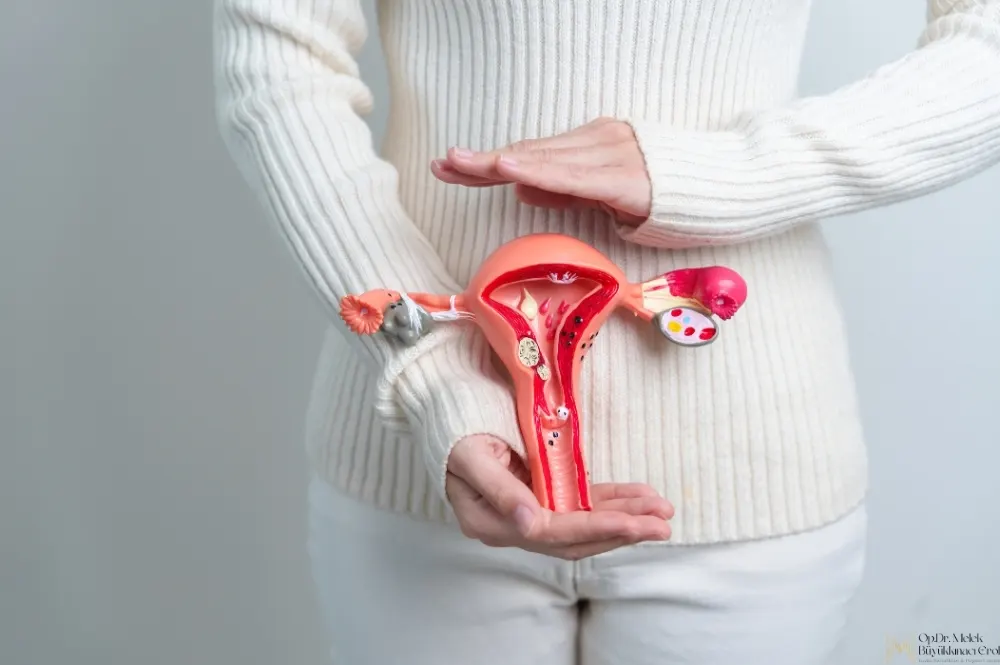
Egg reserve refers to the total number of follicles in a woman's ovaries, reflecting her reproductive potential. Follicles are small sacs that contain the eggs. A decrease in egg reserve means a reduction in the number of eggs present in the ovaries. This can affect fertility, make it harder to conceive, and increase the likelihood of needing IVF treatment.
Why Does Ovarian Reserve Decline?
While the exact cause is not known, age, genetic factors, past illnesses, and treatments applied over the course of care can all contribute to a decline in ovarian reserve.
The most important factor affecting ovarian reserve is a woman's age. Egg reserve begins to decline in women over the age of 35.
In some individuals, genetic factors also increase the risk of reduced ovarian reserve.
A history of conditions such as ovarian cancer or endometriosis is another factor that can negatively affect ovarian reserve.
Certain medical treatments can also affect ovarian reserve. For example, chemotherapy and radiation therapy may reduce it.
Previous surgeries: ovarian surgery performed in the past can lead to a decrease in egg reserve.
What Symptoms Occur When Ovarian Reserve Declines?
Diminished ovarian reserve usually has no noticeable symptoms. However, some women may experience the following:
Early menopause
Irregular periods or absence of periods
Vaginal dryness and reduced sexual desire due to low estrogen levels
Infertility and difficulty conceiving
Which Tests Are Used to Diagnose Diminished Ovarian Reserve?
Diminished ovarian reserve can be diagnosed using the following tests:
Antral follicle count: This is an ultrasound test used to measure the number of follicles present in the ovaries.
FSH test: This is a blood test used to measure the level of FSH, a hormone that stimulates estrogen production.
AMH test: This is a blood test used to measure ovarian reserve.
How Is the AMH Egg Reserve Test Performed?
The AMH (Anti-Müllerian Hormone) blood test is used to determine egg reserve. In this test, the AMH level in the blood is measured to estimate the number of follicles in the ovaries. The blood sample taken is analyzed in the laboratory to determine the AMH level.
When Is the AMH Egg Reserve Test Performed?
Egg reserve tests are usually performed on day 2 or 3 of the menstrual cycle. In women who are not menstruating, the test can be performed on any day.
What Should the AMH Egg Reserve Test Result Be?
AMH levels vary depending on the measurement unit used by the laboratory, but values below 1 generally indicate a low ovarian reserve. Sometimes the number of follicles seen on ultrasound may not match the AMH value — it can appear better or worse. Egg reserve differs from woman to woman, and the AMH level alone is not a sole criterion. Factors such as age and follicle count must also be taken into account.
Normal AMH Values
AMH levels may vary depending on the measurement unit used by the laboratory. In general, young women and those with polycystic ovary syndrome tend to have higher AMH levels, while AMH levels fall with age and as ovarian reserve declines.
High (AMH > 4 ng/ml)
Normal (AMH 1,5-4 ng/ml)
Low (AMH < 1,1 ng/ml)
Very low (AMH < 0,5 ng/ml)
IVF for Women with Low Egg Reserve
When egg reserve is low, achieving a natural pregnancy becomes more difficult. Assisted reproductive techniques such as IVF, together with stem-cell-based treatments like SVF, PRP, and exosomes, can help increase the chance of pregnancy by making the best use of the limited number of quality eggs available.
Chance of Pregnancy in Women with Low Egg Reserve
Women with a low egg reserve can still become pregnant. Even with a reduced reserve, there is still a chance of producing a healthy egg and achieving fertilization. In young women, pregnancy success in cases of low egg reserve is higher than in older women. Compared with women who have a normal reserve, women with low egg reserve may be more likely to experience difficulties conceiving and may be more likely to need assisted reproductive techniques.
Treatment of Diminished Ovarian Reserve
There is no definitive cure for diminished ovarian reserve. However, the following treatments can help improve fertility:
IVF treatment: IVF supports pregnancy by combining eggs and sperm in the laboratory.
Egg donation: Egg donation is an option for women with a significantly reduced ovarian reserve.
Hormone therapy: Hormone therapy can help raise estrogen and progesterone levels.
Stem cell therapy can also be used to help treat low egg reserve in women.
Diminished ovarian reserve is a condition that can affect fertility and lead to infertility. However, treatments such as IVF and egg donation can make pregnancy possible. In Antalya, we achieve quite successful results in treating diminished ovarian reserve. For this purpose, alongside IVF treatment, we also apply PRP, SVF, and exosome therapies.