
 En
En Tr
TrUterine prolapse is a common health issue that significantly affects women’s quality of life, yet is often kept private due to feelings of embarrassment. This condition, which typically develops due to factors such as advancing age, multiple childbirths, and heavy lifting, occurs when the uterus slips from its normal position and descends into the vaginal canal. Because early recognition and treatment are so important, learning to identify the symptoms of uterine prolapse allows for timely intervention and helps prevent complications. Understanding these symptoms — which can range from mild discomfort to signs of severe organ prolapse — helps women monitor their own health more effectively. Recognizing these symptoms early is also essential for seeking medical care promptly.
Contents 13
- A Feeling of Fullness and Pressure in the Vagina
- Tissue Protrusion or a Sensation of a Mass from the Vagina
- Groin and Lower Back Pain
- Urinary Incontinence
- Difficulty Urinating
- A Feeling of Incomplete Bladder Emptying
- Recurrent Urinary Tract Infections
- Constipation and Difficulty with Bowel Movements
- Pain During Sexual Intercourse
- Vaginal Dryness and Irritation
- Vaginal Bleeding or Increased Discharge
- A Feeling of Pelvic Heaviness by the End of the Day
- Discomfort While Walking
A Feeling of Fullness and Pressure in the Vagina
One of the most common complaints among the symptoms of uterine prolapse is a feeling of fullness and pressure in the vagina. Women often describe this sensation as feeling like something is there, or as a downward pulling feeling. This sensation tends to become more noticeable as activity increases throughout the day and is often felt more intensely in the evening. The underlying cause of this fullness and pressure is the weakening of the pelvic support structures that occurs when the uterus shifts out of its normal position. Some women notice this feeling even while sitting, while others only experience it after standing for long periods or during activities such as heavy lifting.
Tissue Protrusion or a Sensation of a Mass from the Vagina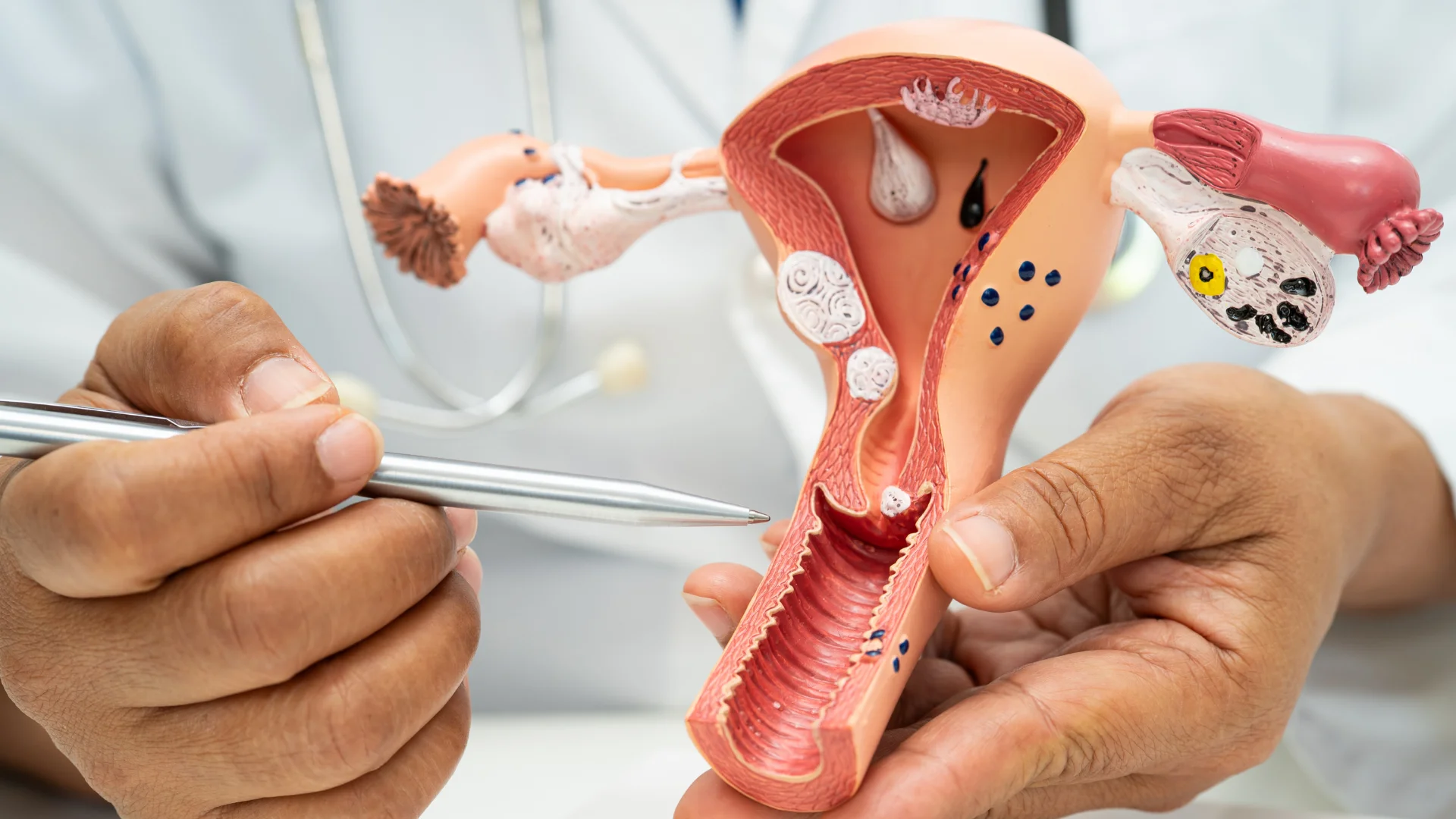
One of the most concrete answers to the question of what the symptoms of uterine prolapse are is tissue protrusion or a sensation of a mass at the vaginal opening. This symptom generally appears in more advanced stages of uterine prolapse and can be noticed by women themselves:
- Palpable Mass: A soft, pink-colored tissue that can be felt by hand or seen at the vaginal opening.
- Foreign Body Sensation: A persistent, uncomfortable feeling that something is inside the vagina and about to come out.
- Difficulty with Hygiene: The protruding tissue makes personal hygiene more difficult and can cause irritation.
- Risk of Injury: In advanced stages, the tissue that remains outside can become injured and bleed from friction against underwear.
This situation is quite distressing for women both physically and psychologically, and it requires prompt medical evaluation.
Groin and Lower Back Pain
Groin and lower back pain, which is commonly seen among the symptoms of uterine prolapse after childbirth, is a direct result of the displacement of the pelvic organs. When the uterus deviates from its normal anatomical position, it places excessive strain on the surrounding muscles and connective tissues. This strain creates a dull ache in the groin area and a chronic discomfort that concentrates in the lower back. The pain is usually milder in the morning and increases with activity throughout the day. Its intensity can rise noticeably after standing for long periods, heavy lifting, or sexual intercourse. This pain is sometimes mistaken for menstrual cramps, but pain related to uterine prolapse tends to be more persistent and constant. Symptoms Worsening While Standing. One of the key features of uterine prolapse symptoms is that they change depending on body position. While standing, gravity can pull the uterus further downward, causing symptoms to intensify:
- Morning-to-Evening Difference: Symptoms are minimal upon waking in the morning but can reach their peak by the end of the day.
- Link to Activity: The feeling of pressure can increase during activities such as walking, running, or climbing stairs.
- Relief with Rest: Symptoms lessen or may disappear completely when lying down or sitting.
- Impact on Work Life: In women who work on their feet (teachers, nurses, sales staff, and similar professions), symptoms can become unbearable by the end of the workday.
Urinary Incontinence
Urinary incontinence is one of the most common symptoms of uterine prolapse and one that most affects social life. Prolapse of the uterus can weaken the pelvic floor muscles that support the bladder and urethra, leading to a condition known as stress incontinence. Involuntary urine leakage occurs during activities that increase abdominal pressure, such as coughing, sneezing, laughing, heavy lifting, or exercise. This problem can cause women to avoid social activities, give up exercise, and experience a loss of self-confidence. Urinary incontinence can appear among the symptoms of uterine prolapse after childbirth because the pelvic floor muscles may have been significantly damaged during delivery. Frequent Urination. Frequent urination is also an important answer to the question of what the symptoms of uterine prolapse are. The prolapsed uterus places mechanical pressure on the bladder and prevents it from filling completely:
- Waking at Night to Urinate: Needing to urinate at least 2-3 times during the night.
- Urgent Need to Urinate: A sudden, intense urge to urinate along with the fear of not making it to the bathroom in time.
- Frequent Bathroom Visits: Urinating more than 8-10 times a day.
- Small Amounts of Urine: Passing only a small amount of urine each time.
Difficulty Urinating
Difficulty urinating is one of the symptoms of uterine prolapse that can be seen especially in more advanced stages. The prolapsed uterus and bladder can kink the urethra, obstructing the normal flow of urine. In this situation, women may need to bear down to start urinating, and the urine stream tends to be weak and intermittent. Some patients find they need to change position while urinating, discovering that leaning forward or sitting at a particular angle helps.
A Feeling of Incomplete Bladder Emptying
A sensation that the bladder has not fully emptied after urinating is one of the symptoms of uterine prolapse:
- Sensation of Residual Urine: Feeling the need to urinate again immediately after leaving the bathroom.
- Repeated Bathroom Visits: Needing to return to the bathroom at short intervals.
- Risk of Infection: Urine that remains in the bladder can create an environment where bacteria multiply.
- Need to Change Position: Remaining urine being released after standing up or moving.
- Social Discomfort: Constant anxiety about finding a bathroom while out in public.
Recurrent Urinary Tract Infections
Recurrent urinary tract infections are a symptom of uterine prolapse that is often overlooked yet can be quite serious, and they can result from residual urine remaining in the bladder. Because the prolapsed uterus prevents the bladder from emptying completely, bacteria can multiply easily in this residual urine and cause infection. Here are the signs of recurrent urinary tract infections:
- Frequent Infection Episodes: Experiencing 3-4 or more urinary tract infections per year.
- Antibiotic Resistance: Bacteria developing resistance to antibiotics as a result of repeated treatments.
- Burning and Pain: A burning sensation, pain while urinating, and abdominal cramping.
- Fever and Fatigue: In advanced cases, the infection can progress to a kidney infection (pyelonephritis).
- Poor Response to Treatment: When treated with antibiotics alone, the infection tends to recur because the underlying uterine prolapse has not been addressed.
This condition can commonly be seen among the symptoms of uterine prolapse after childbirth.
Constipation and Difficulty with Bowel Movements
Uterine prolapse can affect not only the front wall (bladder) but also the back wall (rectum), a condition known as rectocele. The prolapsed uterus and the back wall of the vagina can press on the rectum, making bowel movements more difficult. Women may experience chronic constipation and feel the need to strain excessively during bowel movements. Some patients resort to applying manual pressure to the vagina with a finger (digital manipulation) to help with defecation. Constipation becomes a particularly troublesome symptom of uterine prolapse during pregnancy, since pregnancy itself can predispose women to constipation. In the long term, chronic constipation can lead to hemorrhoids, anal fissures, and the development of more severe pelvic organ prolapse.
Pain During Sexual Intercourse
Pain during sexual intercourse is also among the answers to the question of what the symptoms of uterine prolapse are. Here is what to keep in mind regarding this type of pain:
- Pain with Penetration: A burning and painful sensation in the vagina during or after intercourse.
- Deep Pain: A deep, dull ache in the pelvic region during intercourse.
- Psychological Impact: Reduced sexual desire and avoidance of intercourse due to fear of pain.
- Effect on the Relationship: Problems in sexual life negatively affecting the couple’s relationship.
- Loss of Self-Confidence: Women feeling inadequate or incomplete as a result.
Vaginal Dryness and Irritation
The prolapsed organ can cause the vaginal mucosa to be constantly exposed to the outside environment or to rub against underwear, which can lead to vaginal dryness and irritation. The normal vaginal moisture balance is disrupted, leaving the tissue more prone to irritation. This is commonly seen among the symptoms of uterine prolapse after childbirth, since postpartum hormonal changes can also cause vaginal dryness. Women may experience itching, burning, and discomfort in the vaginal area.
Vaginal Bleeding or Increased Discharge
 Vaginal bleeding or increased discharge can be seen among the symptoms of uterine prolapse. Here are the details regarding vaginal bleeding or increased discharge:
- Contact Bleeding: Bleeding resulting from the protruding tissue rubbing against underwear, a surface while sitting, or during intercourse.
- Ulceration Bleeding: Bleeding that occurs when the tissue protruding outside the vagina dries out and becomes injured.
- Increased Discharge: Irritated mucosal tissue producing more secretions.
- Foul-Smelling Discharge: Discharge developing an odor when an infection is present.
- Concern for Cancer: Bleeding after menopause in particular always requires gynecological evaluation.
Bleeding among the symptoms of uterine prolapse during pregnancy can be confused with pregnancy complications. A doctor should always be consulted, and treatment should continue under medical supervision.
A Feeling of Pelvic Heaviness by the End of the Day
A feeling of heaviness and fatigue in the pelvic area is among the symptoms of uterine prolapse. Women may describe this as feeling like “something is hanging down below” or “like I’m carrying a weight in my pelvis.” This sensation is usually absent or very mild upon waking in the morning, but it can become more noticeable as the day progresses and activity increases. Activities such as standing for long periods, walking, doing housework, or carrying a child can intensify this feeling.
Discomfort While Walking
Discomfort while walking is one of the answers to the question of what the symptoms of uterine prolapse are, and it is an important symptom that directly affects daily mobility. During walking, the prolapsed organ can create friction, pulling, and discomfort in the pelvic area. Here are the details:
- Fullness Between the Legs: A feeling that something is being squeezed between the legs while walking.
- Restricted Movement: Being unable to walk at a normal pace and needing to slow down.
- Postural Changes: Leaning forward or developing a different walking pattern to reduce discomfort.
- Inability to Exercise: Avoiding running, gymnastics, or other active sports.
- Social Isolation: Avoiding activities and outings that require walking.
When symptoms of uterine prolapse are noticed, it is beneficial to consult a doctor and continue treatment under medical supervision.