



Although the menstrual cycle usually follows a regular pattern, occasional delays may occur. While this situation can be concerning, not every delayed period is a sign of a serious health problem. Questions such as “What causes a delayed period?” or “In which months does seasonal menstrual delay occur?” are among the most frequently searched topics related to women’s health. The hormonal system, emotional state, lifestyle, seasonal changes, and many other factors can directly affect the menstrual cycle. Although the answer to the question “What causes menstrual delay?” may vary from person to person, some underlying factors are common in many cases.
In this article, we will discuss the causes of delayed menstruation, when to consult a doctor, the effects of stress, seasonal factors, and whether menstrual irregularities are temporary or permanent. We will also explain what can be done when a period is delayed and how this condition can be prevented.
What Is a Delayed Period?
A delayed period refers to menstruation starting later than the expected date. Although the average menstrual cycle is 28 days, it can normally range between 21 and 35 days depending on individual differences. However, if this period is exceeded or menstruation is delayed by 7 days or more, it is considered a menstrual delay.
When seeking an answer to the question “What causes a delayed period?”, the first step is knowing your own regular cycle well. Each body functions with a unique rhythm, and what is normal for someone else may be considered a delay for you. Therefore, questions like “Why is my period late?” or “Why is my cycle irregular?” are closely related to individual physiology.
What Are the Causes of a Delayed Period?
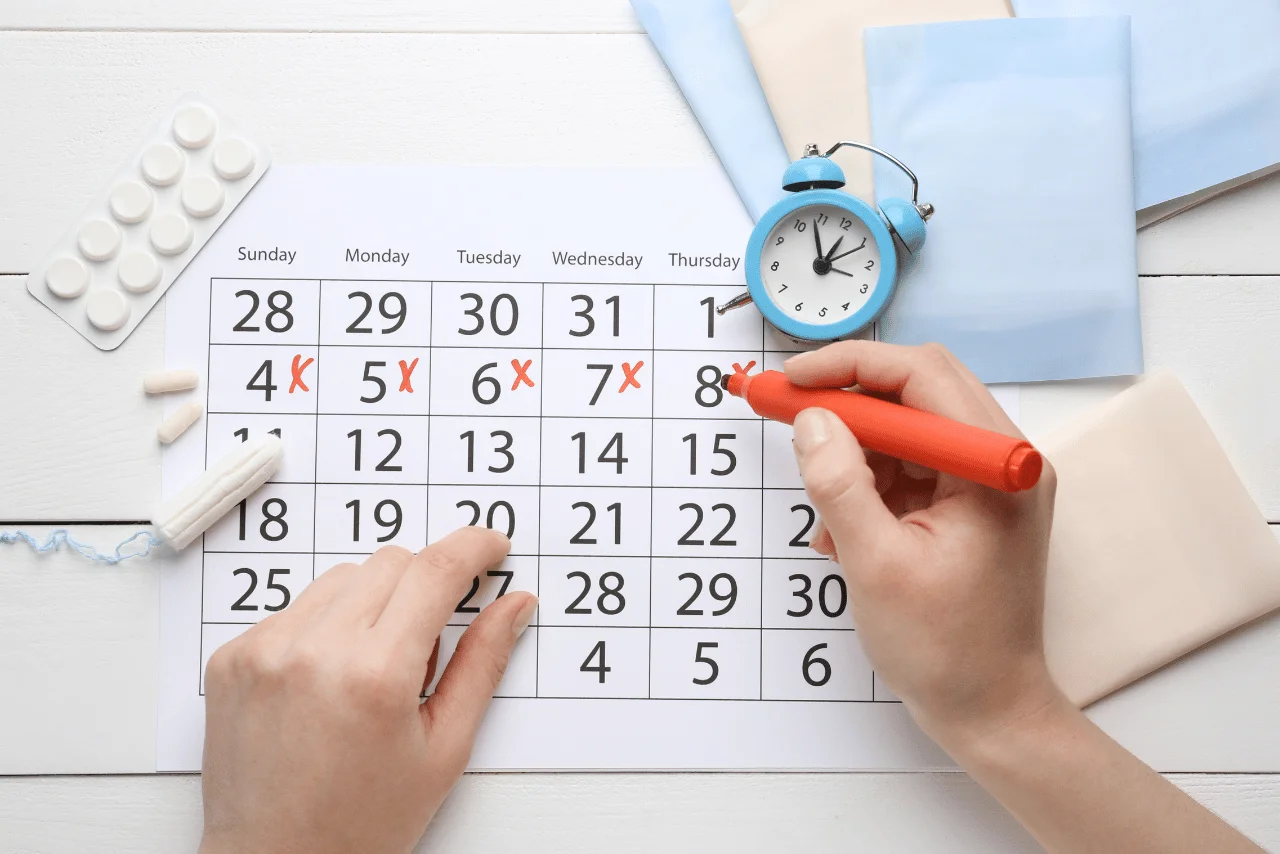
The causes of menstrual delay can be quite diverse. While some are temporary and harmless, others may indicate underlying health problems. Common causes include:
- Stress and psychological pressure, which can affect hormone release through the hypothalamus and delay ovulation.
- Dietary irregularities, especially sudden weight loss or gain, which may disrupt hormonal balance.
- Intense physical exercise, which can strain the body and interfere with menstrual regularity.
- Poor sleep and irregular lifestyle habits, making it harder to maintain hormonal balance.
- Thyroid disorders, affecting both metabolism and the menstrual cycle.
- Polycystic Ovary Syndrome (PCOS), which may prevent ovulation and cause delays.
- Pregnancy, one of the most common reasons for a missed or delayed period.
- Birth control pills and certain medications, which may lead to temporary menstrual irregularities.
- Seasonal transitions, especially during spring and autumn, which can disrupt hormonal adaptation.
The question “What causes a delayed period?” can only be accurately answered when lifestyle, overall health, and personal habits are evaluated together.
When Should You See a Doctor?
In many cases, menstrual delay is temporary. However, medical consultation is recommended in the following situations:
- If the delay lasts longer than 10 days.
- If menstrual irregularities become frequent.
- If severe abdominal pain, excessive discharge, or fever accompanies the delay.
- If pregnancy is suspected but test results are unclear.
- If serious cycle disruptions begin after starting a new medication.
Although “What causes menstrual delay?” may sometimes have simple explanations, recurring delays should always be evaluated by a healthcare professional.
How Does Stress Delay Menstruation?
Stress is one of the strongest external factors affecting the body’s natural balance. Chronic emotional stress can disrupt hormone release by affecting the hypothalamus in the brain. Since the hypothalamus regulates the hormones responsible for the menstrual cycle, increased stress can alter FSH and LH levels, delaying ovulation. When ovulation is delayed, menstruation is also postponed.
Periods of intense stress—such as exams, job changes, relationship problems, or emotional trauma—are commonly associated with delayed menstruation.
In Which Months Does Seasonal Menstrual Delay Occur?
Seasonal transitions play an important role in menstrual regularity. The body may struggle to adapt to changing environmental conditions. Seasonal menstrual delays are most commonly seen during:
- Early spring (March–April), when sunlight exposure changes and melatonin and serotonin levels fluctuate.
- Autumn (September–October), when temperatures drop and daylight hours shorten.
These delays are usually temporary. However, if they persist for several cycles, underlying hormonal issues should be considered.
Irregular Periods: Temporary or Permanent?
Menstrual irregularities may be temporary or long-term:
- Temporary irregularities are often linked to stress, seasonal changes, poor nutrition, or short-term illness.
- Persistent irregularities may be associated with conditions such as PCOS, thyroid disorders, or early menopause.
If menstrual delay becomes consistent, hormonal tests and gynecological evaluation are essential.
What Can Be Done During a Delayed Period?
Instead of panicking, it is best to evaluate the situation calmly:
- First, rule out pregnancy with a test.
- Review your sleep, diet, and stress levels.
- Reduce caffeine and processed foods.
- Warm showers, light exercise, and herbal teas may help relaxation.
- If irregularity persists, consult a specialist.
How Can Menstrual Delay Be Prevented?
To maintain a healthy menstrual cycle, consider the following preventive steps:
- Adopt a balanced diet and limit processed foods.
- Maintain a regular sleep schedule.
- Engage in regular but moderate exercise.
- Practice stress management techniques such as meditation or breathing exercises.
- Protect your body temperature during seasonal changes.
- Have regular gynecological check-ups.
Although there are many possible answers to the question “What causes a delayed period?”, the most accurate evaluation is based on individual lifestyle, hormonal balance, and medical history. If you notice significant changes in your cycle, consulting a specialist for menstrual irregularity treatment is highly recommended.

